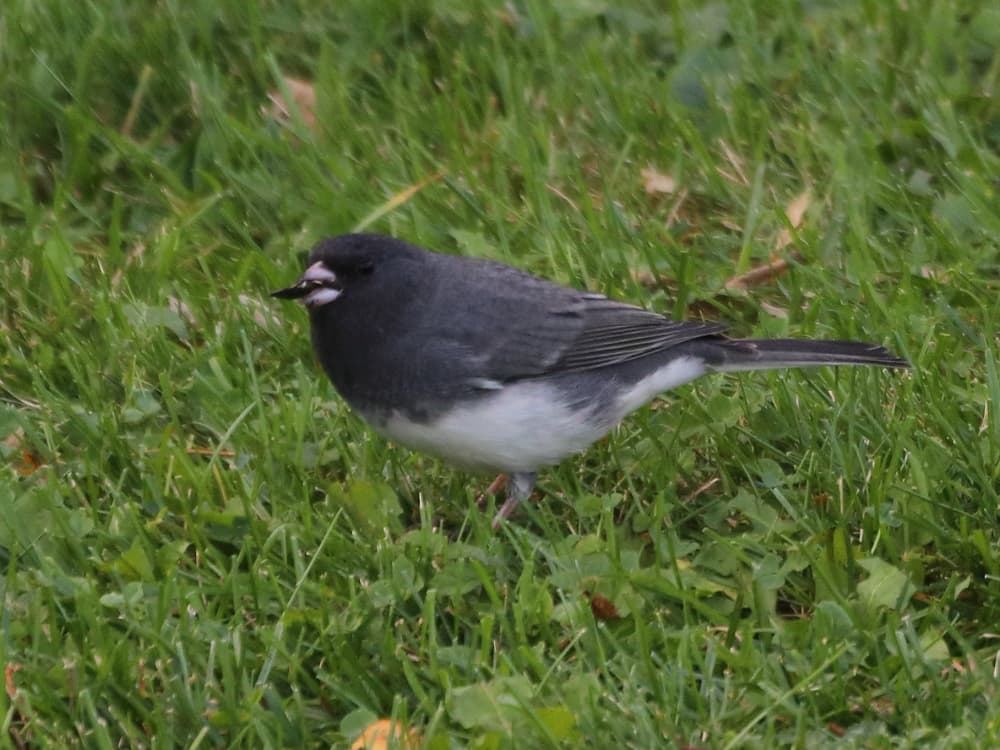
You don't need a huge yard to make a difference for birds. You don't need acres of prairie, a pond, or a professionally designed native-plant garden. You don't even have to be particularly good at gardening.
A few thoughtful changes can make an ordinary backyard more useful to birds and more interesting for you. That's really the goal.
A bird-friendly backyard isn't just a place where you put out a feeder. It's a place where birds can find food, water, shelter, and places to rest and nest.
And the more you pay attention, the more you'll begin to notice that different birds use different parts of your yard.
A chickadee may spend its morning working through the branches of a shrub. A robin may hunt for worms in the lawn. A goldfinch may pick seeds from a flower head. A wren may disappear into a dense corner of the yard.
You don't have to provide everything. You just have to provide a few of the things birds need.
Start With Food
Food is probably the most obvious way to attract birds, and feeders can be a great addition to a backyard.
If you're just getting started, you don't need a complicated feeding station. A simple feeder with black-oil sunflower seed will attract a surprising variety of birds.
Depending on what visits your yard, you can add other foods such as:
- Safflower
- Nyjer
- Peanuts
- Suet
Different foods attract different birds, which makes experimenting part of the fun. But there's an important distinction: Feeders are supplemental food. They aren't the whole backyard habitat.
Birds naturally find insects, seeds, berries, fruit, and other foods throughout the landscape. In fact, some of the best things you can do for birds don't involve buying birdseed at all.
Plant Things Birds Can Eat
Take a look around your yard.
Do you have plants that produce seeds or berries? Do you have flowering plants that attract insects? Do you have trees that produce nuts or fruit?
Plants can provide food for birds throughout the year, often without you having to do anything once they're established.
Native plants can be particularly valuable because they are adapted to your local environment and often support insects and other wildlife that birds depend on.
You don't need to replace your entire yard with native plants overnight. Start small. Add a few native shrubs. Leave some seed-producing flowers standing into fall and winter. Plant something that produces berries. Let one section of the yard become a little less manicured.
Over time, those small changes can add up.
Don't Be Too Quick to Clean Everything Up
This may be difficult advice for people who enjoy a perfectly tidy yard. Birds don't care how tidy your yard looks.
A completely cleaned-up garden can actually remove some of the things birds use.
Seed heads provide food. Fallen leaves provide habitat for insects. Dead branches can provide perches or nesting opportunities.
A little natural mess can be a good thing.
You don't have to let the entire yard run wild. Even leaving one corner somewhat natural can provide additional habitat.
Think of it as a bird-friendly corner. The birds won't judge it.
Provide Water
Food gets most of the attention, but water can be just as useful. A birdbath is one of the easiest additions you can make to a backyard.
Keep it relatively shallow and place it somewhere where birds can see what's around them. Clean it regularly and change the water frequently.
Birds use water for both drinking and bathing, and watching a bird splash around in a birdbath can be considerably more entertaining than it sounds.
During hot, dry weather, a reliable source of clean water can be especially useful.
In winter, a heated birdbath can keep water available when everything else is frozen.
And you don't need an elaborate fountain. A simple basin will do.
Give Birds Places to Hide
Birds need more than food and water. They also need places to feel safe.
Trees, shrubs, brush piles, and dense vegetation can provide shelter from weather and predators. Evergreen trees and dense shrubs can be particularly valuable in winter.
A yard with a variety of vegetation heights is often more useful to birds than one consisting almost entirely of short grass.
Think vertically.
Can birds find something useful at ground level? What about low shrubs? What about taller trees? Different species use different layers of the landscape. A Mourning Dove may spend much of its time on the ground while a chickadee works through the branches of a tree. A cardinal may move back and forth between shrubs and the ground.
You don't need to design your yard around a diagram. Just give birds some choices.
Let Some Trees and Dead Wood Remain
Dead trees and branches don't necessarily mean something has gone wrong. To a bird, they can be valuable habitat.
Woodpeckers search dead wood for insects and may excavate cavities in dead or dying trees. Other birds can eventually use those cavities for nesting or shelter.
Of course, safety comes first. A dead tree that could fall on your house, driveway, or an area where people spend time may need to be removed. But if a dead branch or tree is safe to leave in place, consider letting nature keep it.
You may be surprised by who uses it.
Make Room for Native Plants
If you're going to add plants specifically for birds, native plants are a good place to start. Native trees, shrubs, grasses, and flowers can provide seeds, berries, nectar, insects, and cover. They also tend to fit your local growing conditions better than plants that aren't adapted to the region.
For a Midwest backyard, that might mean looking at plants such as native:
- Oaks
- Serviceberries
- Dogwoods
- Coneflowers
- Sunflowers
- Goldenrods
- Asters
- Native grasses
You don't need all of them. And you don't need to turn your yard into a botanical garden. Choose plants that work for your soil, sunlight, available space, and gardening style.
The best bird-friendly plant is one you're actually willing to keep growing.
Think About Nesting Season
Birds need safe places to raise their young.
Some species nest in tree cavities. Others build nests in shrubs, trees, grasses, or even on structures around your home.
You can help by providing suitable vegetation and avoiding unnecessary disturbance during nesting season. If you have shrubs that birds regularly use for nesting, give them some space.
If you discover an active nest, resist the temptation to get too close for a better photograph. Watching from a distance is usually more rewarding anyway.
Birdhouses Can Help—Sometimes
Birdhouses can be useful for species that naturally nest in cavities, but putting up a birdhouse doesn't automatically mean birds will move in.
The type of house, entrance-hole size, location, habitat, and species in your area all matter. A birdhouse is most useful when it's designed for the birds you actually want to attract. And once you put one up, it needs maintenance.
Old nesting material should generally be removed between nesting attempts when appropriate, and the box should be checked for damage and cleaned according to recommendations for the species. A birdhouse is not a bird vending machine. Put one up and see what happens.
Reduce Pesticide Use
Birds eat insects. That's one reason a backyard with a healthy insect population can be a good bird habitat. It's also one reason to think carefully before reaching for pesticides every time you see a bug.
You don't have to tolerate every pest. But consider whether you actually need to eliminate every insect in your yard. A caterpillar that looks like a garden problem to you may look like lunch to a chickadee feeding its young.
Sometimes the best bird-friendly landscaping strategy is simply to accept a little imperfection.
Make Your Windows Safer
There's one backyard hazard that deserves special attention: windows.
Birds don't see glass the way we do. Reflections can make windows appear to be open sky or vegetation, and collisions can cause serious injury or death.
If birds regularly hit a particular window, take action rather than hoping the problem will go away.
Exterior window markers, screens, film, or other bird-friendly deterrents can help make the glass more visible to birds. And don't assume that having a feeder far away automatically solves the problem. Window safety depends on the particular location and circumstances.
If you notice repeated collisions, treat that as useful information. The birds are telling you something about your yard.
Keep Cats From Hunting Birds
Outdoor cats can pose a significant threat to birds and other wildlife.
If you have a cat, keeping it indoors or using a secure outdoor enclosure or supervised setup can reduce the number of birds and other animals it encounters.
This isn't about blaming the cat. Cats are doing what cats naturally do. It's about recognizing that a backyard designed for birds and a free-roaming predator are not exactly working toward the same goal.
Keep the Feeding Station Clean
If you use bird feeders, cleaning them is part of creating a bird-friendly backyard.
Old or wet food, accumulated droppings, and large amounts of spilled seed can create problems. Clean feeders regularly, replace spoiled food, and clean up accumulated debris underneath.
A clean feeding area is better for the birds and usually more pleasant for you, too.
For more on this, see How to Keep Your Bird Feeders Clean and Safe.
Don't Try to Do Everything
This might be the most important advice in the whole article.
You don't have to do all of this.
You don't need:
- Five feeders
- A dozen birdhouses
- A pond
- Twenty kinds of native plants
- A professionally landscaped backyard
- A squirrel-proof fortress
- Or a yard that looks like it belongs in a magazine
Start with one of these things. Put out a birdbath. Plant a native shrub. Leave some seed heads standing through winter. Add a feeder. Make one problem window safer. Let part of the yard grow a little more naturally.
Then see what happens.
Let the Birds Be Your Guide
The best bird-friendly backyard isn't necessarily the one with the most features. It's the one that gives birds useful places to live their lives.
Watch what happens after you make a change.
Did goldfinches start visiting the flowers? Did a wren move into the shrub beside the house? Did woodpeckers begin using that old tree? Are there more insects and more birds hunting them? Did a birdbath suddenly become the busiest place in the yard?
Those observations are more useful than any checklist.
Your backyard is its own little ecosystem, and every yard is different. The more you watch, the more you'll learn what your particular birds need. And eventually, you may realize that you didn't just make your backyard more bird-friendly. You made it more interesting for yourself, too.
That's a pretty good trade.
Notice. Record. Remember.