You don't need a closet full of equipment to enjoy birdwatching. You don't need an expensive camera, a special vest with seventeen pockets, or binoculars that cost more than your first car.
You can start by sitting near a window and watching the birds at your feeder. You can take a walk around the neighborhood and see what turns up. You can even begin with nothing more than a comfortable place to sit and a little curiosity.
Still, a few simple pieces of gear can make birdwatching easier and more enjoyable. Here's what I'd recommend if you're just getting started, along with a few things you can comfortably leave on the store shelf for now.
1. Binoculars: Your Most Useful Piece of Gear
If you're going to buy one piece of birdwatching equipment, make it a decent pair of binoculars. Or, if you’re like me with only one good eye, look for a monocular. Most of the suggestions that follow still apply.
Birds don't always cooperate by sitting nearby in good light. A chickadee might pause on a branch just long enough for you to notice it, while a hawk could be soaring high overhead. Binoculars help bring those birds closer and reveal details you'd otherwise miss.
You don't have to spend a fortune. Look for a pair that feels comfortable in your hands, focuses easily, and gives you a reasonably clear view. Try them before buying if you can. Comfort matters, especially if you'll be holding them up for more than a few seconds.
You'll often see binoculars described by numbers such as 8×42 or 10×42. The first number indicates magnification; the second describes the diameter of the objective lenses in millimeters. An 8×42 pair is a sensible starting point for many people because it offers useful magnification without being too difficult to hold steady.
Higher magnification isn't automatically better. A shaky, narrow view can make a bird harder to find, not easier.
And if you're not ready to buy binoculars, don't let that stop you. Start with the birds you can see clearly. You can always upgrade later.
2. A Field Guide or Bird Identification App
Sooner or later, you'll see a bird and wonder what it is.
Sometimes the answer is obvious. A bright red cardinal isn't usually much of a mystery. Other times, you'll be looking at a small brown bird that seems determined to keep its identity a secret.
A field guide can help you compare birds by appearance, habitat, behavior, and range. A regional guide is especially useful because it concentrates on the birds you're likely to encounter.
An identification app offers another approach. You can search for birds, compare pictures, and, with some apps, use a photograph or recording to help identify a visitor. These tools can be helpful, but they're not infallible. Treat a suggested identification as a starting point and check the details when something doesn't look right.
You don't need a shelf full of guides and a phone full of apps. Pick one resource that you find easy to use and get comfortable with it.
The goal isn't to memorize every bird in North America. It's to become a little more familiar with the birds around you.
3. A Way to Remember What You See
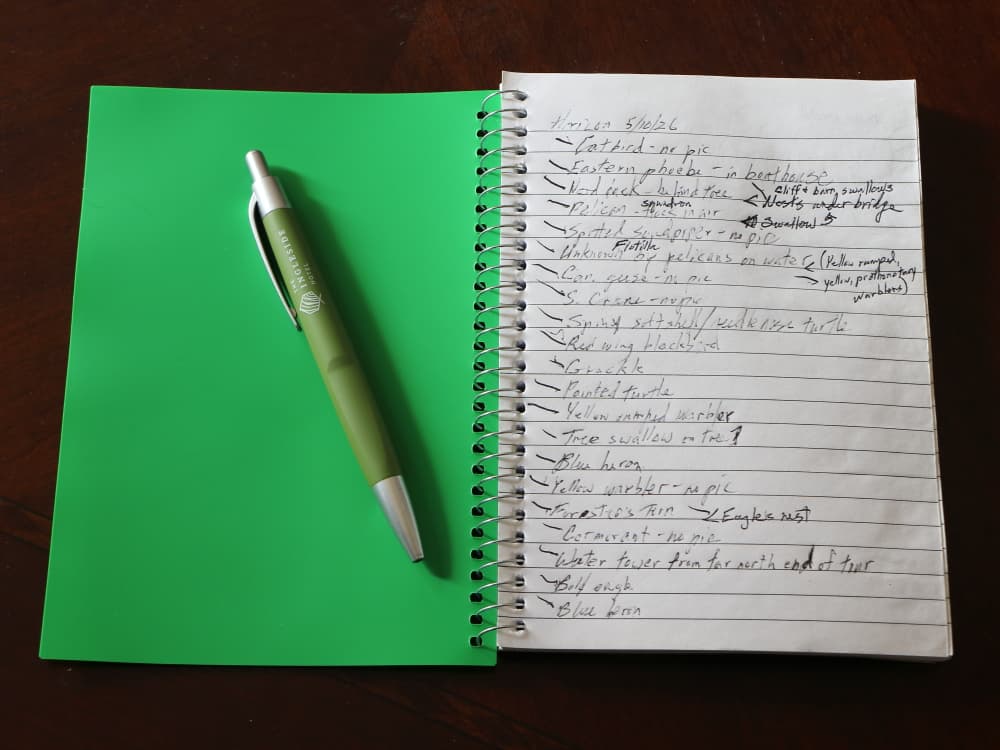
This is one piece of birdwatching equipment that's easy to overlook: something to record your observations.
You might use a small notebook, a note-taking app on your phone, or a personal bird journal. The format doesn't matter nearly as much as having a place to keep your observations.
Record the date, the bird you saw, and perhaps the number of birds or something interesting about their behavior.
For example:
October 8 — Three white-throated sparrows feeding beneath the shrubs. First ones I've noticed this fall.
That's a useful observation. You don't need a scientific description or a perfect account of everything that happened.
Over time, these small notes become more valuable. You may notice that a familiar visitor returns around the same time every spring, that goldfinches become more noticeable in late summer, or that a particular species hasn't appeared in your yard for several months.
A personal journal helps turn individual sightings into a record of your backyard's changing seasons.
If you'd like a simple digital place to keep track of backyard sightings, that's exactly the idea behind Backyard Bird Tracker. But a paper notebook works just fine, too.
The important thing is to give yourself a way to remember.
4. Clothing That Suits the Weather
Birdwatching has a way of making you forget how long you've been standing outside. That can be pleasant on a mild spring morning and considerably less pleasant when a Wisconsin wind finds its way through your jacket.
Dress for the weather, and remember that standing still can feel colder than walking.
In cooler months, layers are your friend. A warm hat, gloves that let you handle binoculars, and comfortable shoes can make a real difference. In summer, consider a hat, insect repellent when appropriate, and water.
You don't need specialized outdoor clothing to watch birds in your backyard or take a stroll through a local park. Wear what you have, provided it's comfortable and suitable for the conditions.
If you're heading into unfamiliar terrain, check the weather and trail conditions first. Staying comfortable and safe makes it much easier to enjoy the birds.
5. A Small Bag for the Extras
A backpack or small shoulder bag can be handy if you regularly take longer walks or visit nature preserves.
You might carry binoculars, a field guide, a notebook, water, a snack, and perhaps a spare layer of clothing. A bag also gives you somewhere to put everything when you aren't using it. For backyard birdwatching, however, a dedicated birding backpack is hardly essential. You may not need a bag at all.
Start with the items you actually use. If you're constantly wishing you had somewhere to put your notebook or water bottle, then consider a small bag.
There's no need to equip yourself for a week in the wilderness when you're walking to the end of your driveway.
6. A Comfortable Place to Sit
Some birds are active and easy to spot. Others reward patience.
A folding stool or simple seat pad can make a long stretch of observation more comfortable. You might use one while watching a woodland edge, waiting near a pond, or sitting quietly in your backyard.
A comfortable chair by a window can work just as well.
In fact, you may discover that your best birdwatching happens when you aren't walking anywhere at all. Sit quietly near a feeder, watch the shrubs, and see which birds arrive when the yard settles down.
You don't need a special birdwatching seat. You just need somewhere comfortable enough that you're willing to stay awhile.
7. Your Phone, If You Want It
Your smartphone can be a useful birdwatching tool.
You can use it to look up an identification, check a field guide, take a quick photograph, or record a note about what you've seen. Some birding apps can also help you recognize birds by their calls.
Just remember that a phone camera won't always produce a wonderful photograph of a bird sitting at the far end of a tree branch. Small birds move quickly, light can be difficult, and distance is unforgiving.
Specialized adapters that attach a phone to binoculars can be fun to experiment with, but they're not necessary for beginners.
If you enjoy photography, explore it as you go. If you'd rather watch the bird than fiddle with a camera, that's perfectly fine, too.
The best photograph isn't always the best memory.
What You Can Skip for Now
Birdwatching equipment can get elaborate. There are specialized cameras, spotting scopes, tripods, purpose-built clothing, carrying systems, and accessories for just about every situation.
Some of these items are genuinely useful for particular kinds of birding. A spotting scope, for example, can be valuable when watching distant waterbirds. Serious bird photographers may eventually want specialized camera equipment.
But none of that is a requirement for getting started.
You don't need to buy everything at once, and you don't need to keep up with what other birders own. Let your interests and experience guide your purchases.
After a few weeks of watching birds, you'll have a much better idea of what would actually make your time outside more enjoyable.
The Best Birdwatching Gear Is the Gear You'll Use
It's easy to get caught up in preparing for a hobby. Research the binoculars, compare the field guides, read reviews, and build a shopping list.
Before long, getting ready to watch birds can become more complicated than watching birds.
Keep it simple.
Start with what you have. Add binoculars or an identification guide when they would be useful. Find a comfortable place to sit, and give yourself time to notice what's happening around you.
Pay attention to the ordinary visitors, too. The cardinal at the feeder, the sparrows scratching beneath the shrubs, and the robin tugging a worm from the lawn can be just as interesting as a bird you've never seen before.
And when something catches your attention, take a moment to record it. A short note today may become a welcome reminder years from now.
You don't need the most impressive equipment. You need curiosity, a little patience, and a reason to look out the window.
Notice. Record. Remember.