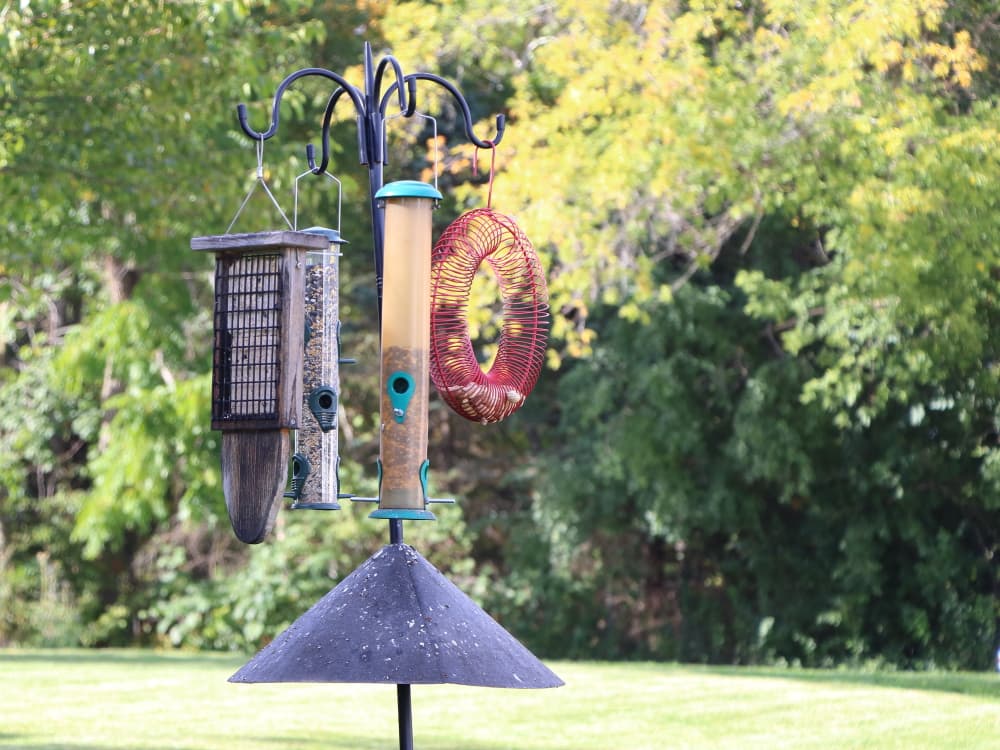
There’s something satisfying about filling a bird feeder and then waiting to see who shows up.
Maybe it’s the cardinal that seems to appear every morning. Maybe a chickadee grabs a sunflower seed and disappears into the shrubs. Maybe a downy woodpecker works its way around the suet feeder while a squirrel sits nearby, trying to figure out how to get involved.
Before long, you start wondering…
Am I feeding the right food?
Do I need a different kind of feeder?
Why do the birds keep ignoring that expensive seed I bought?
The good news is that feeding backyard birds doesn't have to be complicated. You don't need six feeders, twelve kinds of seed, or a backyard that looks like a bird-supply store.
Start with a few basics, pay attention to which birds visit, and adjust from there.
Start With One Good Feeder
If you're new to bird feeding, you don't need to buy every kind of feeder you see. A simple platform or hopper feeder is a good place to start.
Platform feeders
Platform feeders are basically an open table. Birds can easily see the food and perch wherever they like.
They're particularly good for birds such as:
- Northern Cardinals
- Blue Jays
- Mourning Doves
- Dark-eyed Juncos
- House Finches
- Black-capped Chickadees
The downside is that platform feeders are open to just about everything else, too. Squirrels, chipmunks, and larger birds may be regular customers.
That's not necessarily a problem. It just means you'll want to keep an eye on what happens.
Hopper feeders
Hopper feeders hold more seed and protect it from some of the weather. They're a good all-purpose choice and can attract many of the same birds as a platform feeder.
If you don't want to refill a feeder constantly, a hopper can be a convenient choice.
Tube feeders
Tube feeders are particularly useful for smaller birds such as chickadees, finches, and nuthatches.
They're also a good way to offer sunflower seeds while making it somewhat harder for larger birds to dominate the feeder.
Suet feeders
Suet feeders open up another part of the backyard bird menu.
Woodpeckers, nuthatches, chickadees, and other insect-eating birds may visit regularly, especially during colder months.
Suet can be particularly enjoyable to watch because birds often approach it differently from seed feeders. A Downy Woodpecker clinging to the side of a suet cage is a very different sight from a cardinal sitting on a perch.
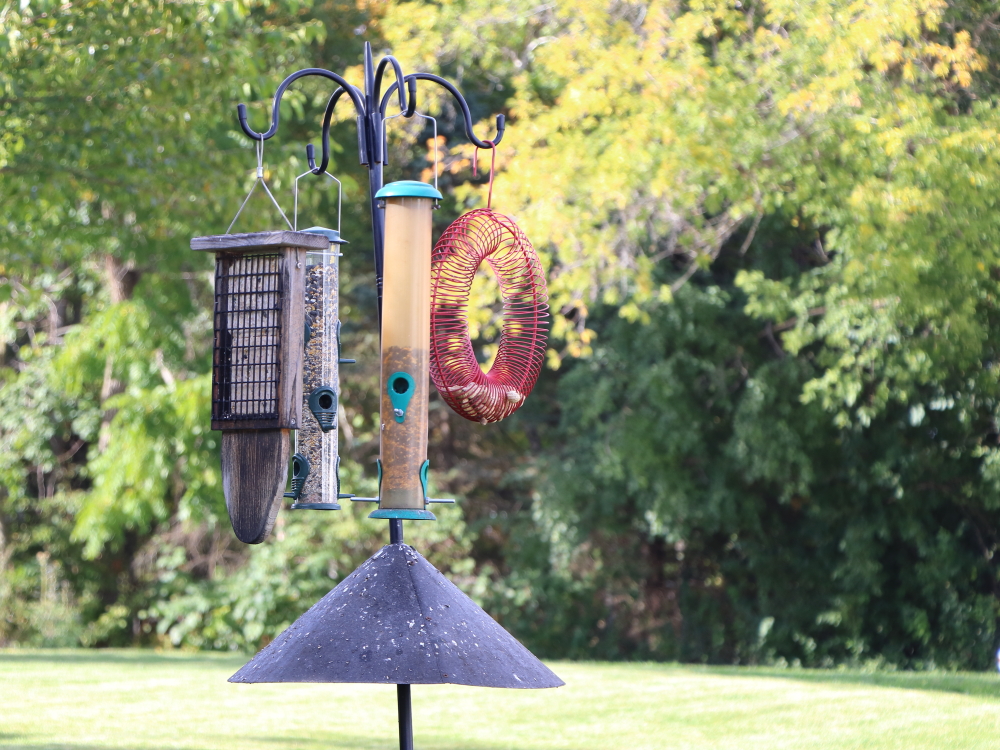
Don’t be intimidated by the photo below. It shows some of the feeders I’ve accumulated over many years. I did not start with all these.
So, What Should You Put in the Feeder?
If you're standing in the bird-seed aisle wondering which bag to buy, here's the simplest answer: Start with black-oil sunflower seed. It's widely attractive to backyard birds and works well in many different types of feeders.
Depending on what visits your yard, you can then experiment with other foods.
Black-oil sunflower
As I mentioned above, this is probably the best all-around starting point. Cardinals, chickadees, finches, nuthatches, woodpeckers, and many other birds will eat it.
The shells can make a mess underneath the feeder, but that's a small price to pay for having a busy feeder. (A rake and an empty ice cream bucket can help with keeping the area tidy.)
Safflower
Safflower is another useful seed, especially if cardinals and House Finches are high on your backyard guest list.
Some birders also use it in an attempt to reduce squirrel activity. Results vary (squirrels apparently have not read the same bird-feeding manuals we have), but it can be worth trying.
Nyjer
Nyjer is a tiny seed that works particularly well in specialized finch feeders.
American Goldfinches are the birds many people have in mind when they buy it, and watching a group of goldfinches hanging from a nyjer feeder can be a highlight of the summer.
Peanuts
Peanuts attract birds that enjoy larger, energy-rich foods, including Blue Jays, woodpeckers, nuthatches, and some other species.
Use unsalted peanuts intended for birds or wildlife. Salted snack peanuts aren't a good choice for your backyard visitors.
Suet
Suet is especially useful during colder weather when birds need high-energy foods.
Woodpeckers are among the most obvious visitors, but chickadees and nuthatches may also become regular customers.
In warm weather, ordinary suet can melt or spoil, so pay attention to the product and the temperature.
Millet
Millet is popular with many ground-feeding birds, including juncos and sparrows.
If you have a platform or ground-feeding area, offering some millet can bring in birds that aren't particularly interested in hanging feeders.
What About Mixed Birdseed?
This is where things can get a little frustrating.
A big bag labeled “Wild Bird Food” may contain several different seeds, but that doesn't mean birds will eat all of them equally. Birds are selective eaters.
You may discover that the birds pick out the sunflower seeds and leave a pile of other ingredients sitting underneath the feeder. That's one reason I prefer starting with a single food rather than buying a complicated mix. You can see exactly what the birds are eating. Once you know who's visiting, you can experiment.
Feed the Birds You Actually Want to See
One of the fun things about feeding birds is discovering that different foods attract different birds.
Want more goldfinches? Try nyjer.
Want more woodpeckers? Try suet or peanuts.
Want cardinals? Sunflower and safflower are good places to start.
Want juncos and other ground feeders? Try offering some millet on a platform or suitable ground-feeding area.
There isn't one perfect bird food. Your backyard will tell you what works.
Pay attention. If a particular food disappears quickly, the birds are giving you some useful information.
Don't Forget Water
Although this is an article about feeding birds, there's one thing worth adding to your setup that doesn't go in a feeder: water.
A clean birdbath can attract birds that rarely visit your feeders, and during hot or dry weather it can become an especially valuable resource.
Keep the water shallow, change it regularly, and clean the birdbath. In winter, a heated birdbath can provide access to unfrozen water when natural sources are covered with ice.
You’ll likely discover that the birdbath becomes just as interesting to watch as the feeders. A birdbath was just about the last item I added to my backyard over the years. But I’m glad I did. (I don’t keep it outside through a Wisconsin winter though.)
Feeding Birds Through the Seasons
You don't necessarily need a completely different feeding strategy every few months, but your backyard visitors will change with the seasons.
Spring
Spring brings migration and nesting activity. You may see new species passing through your yard, along with familiar residents becoming much more active.
Keep feeders clean and stocked, but remember that natural foods—including insects—become increasingly important as the weather warms.
This is also a good time to make sure fresh water is available.
Summer
Summer can be surprisingly quiet at the feeders. That's not necessarily a bad thing.
Birds have plenty of natural food available, including insects, berries, and seeds. Parents may also spend more time searching for food away from your feeders.
Keep nectar feeders clean and fresh, especially during hot weather. And don't be concerned if your seed feeder isn't as busy as it was in winter. The birds have other things to do.
Fall
Fall migration can bring a parade of new visitors.
Keep your feeders stocked and watch carefully. You may see birds that aren't regular residents of your yard passing through for only a few days.
This is also a good time to leave seed-producing flowers standing in your garden rather than cutting everything back immediately.
Winter
Winter is when bird feeding becomes especially noticeable.
Natural food can be harder to find, and birds need more energy to get through cold nights. Sunflower seeds, peanuts, and suet can all be useful winter foods.
You'll also notice something else: birds have routines.
The same chickadees may visit at roughly the same times every day. Cardinals may arrive together. Juncos may appear under the feeders shortly after sunrise.
Once you start paying attention, the feeder becomes more than a place to put birdseed. It becomes a place to observe.
Keep Your Feeders Clean
There's one part of bird feeding that isn't nearly as much fun as watching the birds: cleaning the feeders.
Do it anyway.
Old seed, wet seed, mold, and bird droppings can create an unhealthy environment. Clean feeders regularly, remove old or spoiled food, and don't allow large amounts of seed hulls and debris to build up underneath. Nectar feeders need particularly frequent attention during warm weather.
If a feeder looks dirty, smells bad, or contains wet or moldy food, it's time to clean it. A clean feeder is simply part of being a responsible bird feeder.
And Then There Are the Squirrels
Of course there are squirrels.
You knew this was coming.
You can spend a considerable amount of time and money attempting to construct the perfect squirrel-proof feeding system. The squirrels will consider this a personal challenge.
Baffles, appropriate feeder placement, weight-sensitive feeders, and different types of seed can all help. Some people simply learn to tolerate a certain amount of squirrel activity.
There's no shame in either approach.
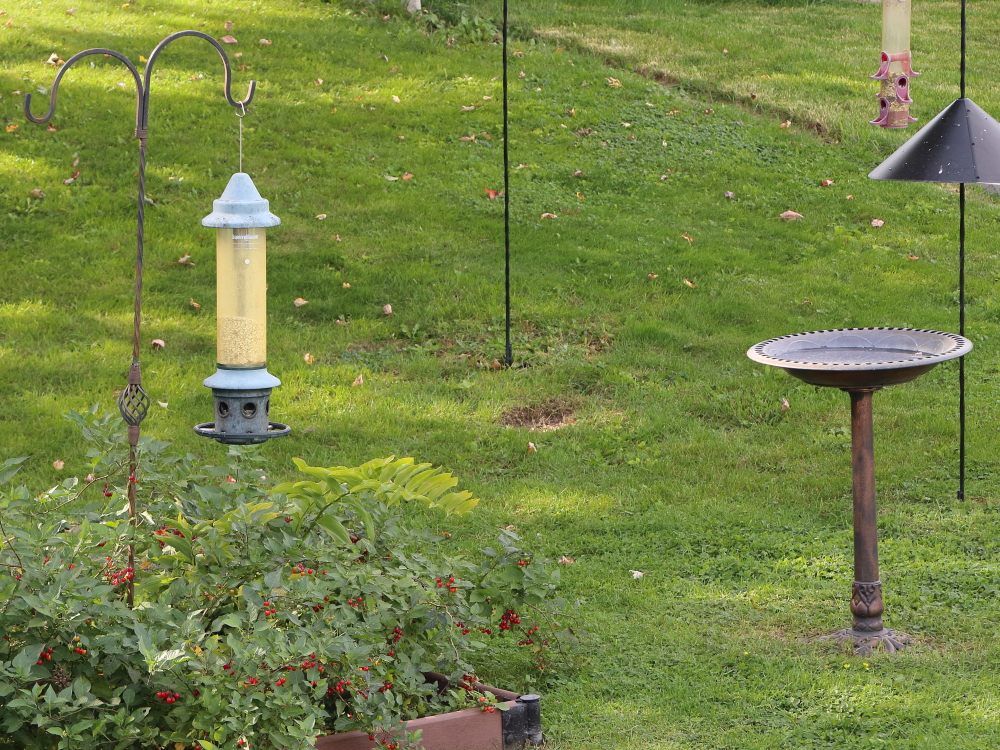
Personally, I'd rather spend more time watching the birds than trying to achieve complete squirrel domination. That said, I do have baffles on most of my poles, and they work as advertised. I also have a weight-sensitive feeder on a short pole (see above) where a baffle wouldn’t help.
If squirrels are becoming a serious problem, though, it's worth addressing the issue. A feeder that is constantly being emptied by squirrels isn't doing much for the birds you're trying to feed.
The Most Important Part: Pay Attention
You don't need a complicated feeding station to enjoy backyard birds.
Start with one feeder. Try sunflower seed. Keep it clean. Add water if you can.
Then watch.
- Which birds show up?
- Which foods disappear first?
- Which birds arrive together?
- Which ones visit in winter but disappear in summer?
- Do the same birds return year after year?
That's where backyard bird feeding gets interesting.
You're no longer simply putting out birdseed. You're beginning to notice the little patterns that make your particular backyard unique. And that's really what backyard birding is about.
Notice. Record. Remember.
The feeder just gives you a reason to start.