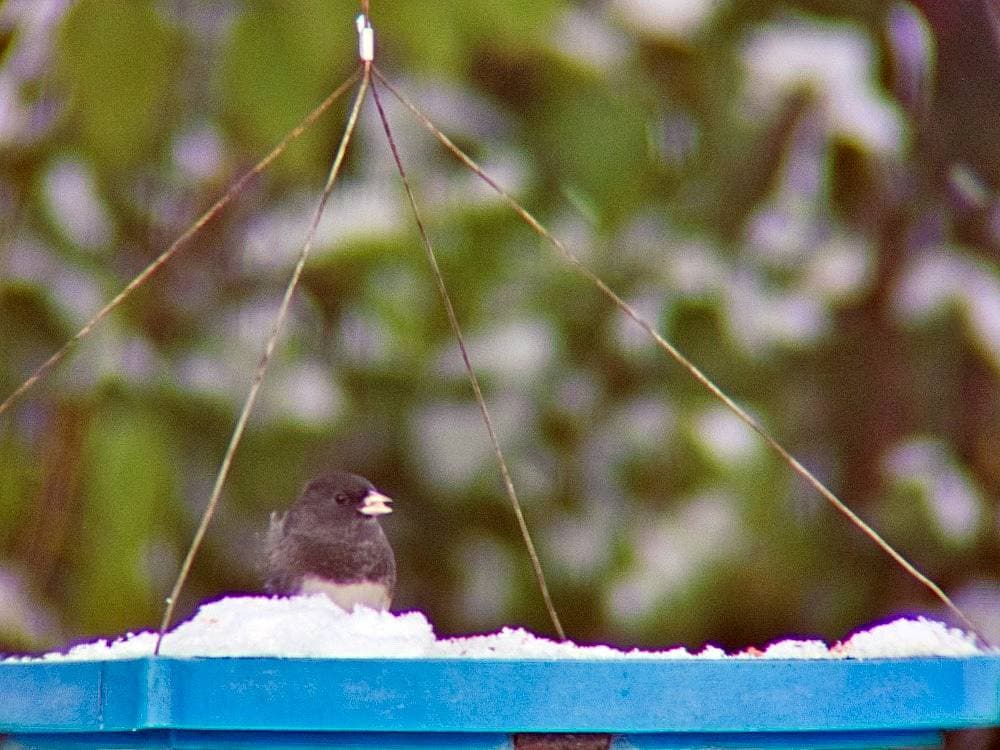
Have you ever asked yourself anything like this: “Why haven’t I seen a robin for weeks now? It’s only August.” Or this: “The juncos haven’t visited for months. Where did they go?”
If so, you’re not alone.
Many bird watchers (and even non-birders) wonder about “missing” birds from time to time. Robins are known as harbingers of spring, but where are they the rest of the year?
Let’s take a look at the possibilities related to bird migration. I’ll be doing this from a Midwest (Wisconsin) perspective, but the ideas will likely apply just as well wherever you live.
Starting with What You Notice
Take those examples above again.
One week you’re seeing half a dozen robins duking it out for territory. Then suddenly (and probably without your noticing it right away) they’re gone.
Or think about the juncos. You hadn’t seen them all summer, but now it’s cold out (and maybe snowy), and the flock returns.
The reasons might not all be related to migration, as such, but there’s something going on in your backyard that’s very similar.
Not Every Bird Migrates
Those robins? They probably didn’t head south for the winter. They’re just staying closer to home - perhaps a nest in the woods.
On the other hand, the juncos likely moved in just for the winter. (Southern California seems to be an exception to this behavior.)
Most birds fit into one of these 3 categories:
- Year-round residents - birds you might see throughout the year
- Seasonal visitors - birds that spend part of the year here and then move elsewhere
- Migrants - birds that may stop in your area but don’t stay for a season
You could make 4 groups if you split Seasonal into Summer and Winter.
And that idea prompts me to mention that there’s a lot of gray area here. The birds don’t know we’re trying to pigeonhole them, so to speak, into a specific category. They just go where they please when it suits them best.
Why Do Birds Migrate?
Migration isn’t just all about colder temperatures, like most people think. There can be other - and sometimes multiple - factors involved.
Some possibilities include:
- Food availability
- Breeding opportunities
- Weather and temperature
- Competition
- Day length and other seasonal cues
If a bird can stand the cold but there’s too much competition for food or shelter, they’ll just move on.
But Where Do They Go?
The answer to that question is a not-very-satisfying - it depends.
It depends on the species you’re wondering about, because (as hinted at earlier) some stay in your area year-round, some fly south for the winter, and some might actually head north.
What you’re most likely wondering about is how far south those migratory birds go. Without getting into a very detailed listing, some birds only go as far as the southern US states, like Mississippi or Alabama.
Some will wing it farther into Central America or the Caribbean. And still others will make the trek all the way to South America.
They tend to use one of the geographic areas we have termed flyways. But again, since that’s our term, not theirs, the birds are certainly not restricted to one of the 4 major flyways shown below.
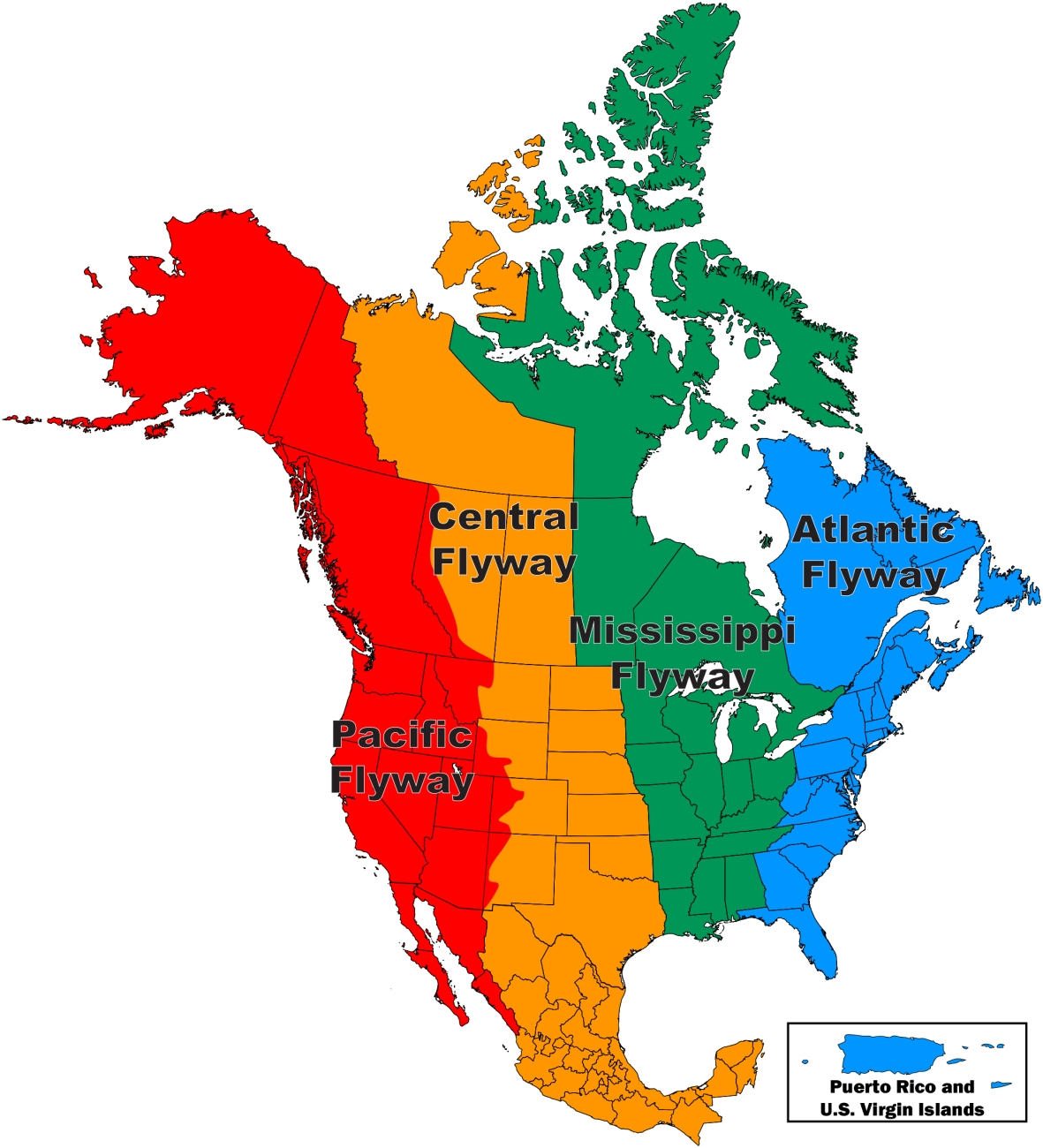
Wisconsin (my home) lies within the Mississippi Flyway, one of the major routes used by migrating birds traveling between northern breeding grounds and wintering areas farther south. So I expect to see mostly those birds that tend to use it. But I wouldn’t be too surprised to see one from a neighboring flyway make a stop in my backyard.
Well, maybe surprised, but not flabbergasted.
Want to see where a particular bird goes?
The Cornell Bird Migration Explorer lets you explore migration journeys for individual species using tracking data from thousands of individual birds.
Migration Isn’t One Big Event
ven though what you may read elsewhere seems to imply it, there’s no “start date” (or “end date”) for bird migration.
Different species move at different times. Even within a given species, the timing can vary. This is why your backyard visitors normally change gradually. One species appears. Another disappears. Then a few days later, someone unfamiliar shows up!
Becoming a Migration Stopover
If you have some or all of the following elements, your own backyard may become a stopover for migrating birds who are looking for a place to rest and refuel.
- Seeds
- Water
- Berries
- Insects
- Shelter
- Trees / shrubs
- Other native plants
You don’t have to create a formal “wildlife habitat” to please the birds. Simply offering a few things they find attractive should be enough to cause them to stop in and tweet, “Hi!” and “Thanks!”
Migration Changes Who Visits Your Feeder
So the species you see at your backyard bird feeder can change quite dramatically as the seasons pass.
Those juncos you noticed most of the winter are nowhere to be found come spring. Taking their place are the bright yellow goldfinches that you haven’t seen since last fall.
The Backyard Bird Tracker can be your journal that helps you remember these yearly changes that you might not otherwise have even noticed.
You Don’t Have to ID Them All
Let’s say a small bird (not sure which species) appears one morning and then is gone, perhaps forever.
You don’t have to know exactly why that happened. Simply recording in your journal: “Saw a bird I’ve never seen before. Stayed about 5 minutes.” is a valuable observation.
So is this: “Three unfamiliar sparrows in the yard this morning.”
The point is that you jotted it down and can come back to that memory later.
A Migration Journal Challenge
Let me leave you with this simple, but multi-year challenge.
Pick one month this spring or fall and keep track of the changing cast of birds in your yard.
Record:
- First appearance
- Last appearance
- Species you see frequently
- Species that seem to be passing through
- Anything else unusual
Then pick the same month next year and do the same thing. (You may have to add a reminder to a calendar now so you remember next year.)
Records like these can be really fun and interesting to examine as the years go by.
And you will be doing this for years to come, right?
I thought so.